
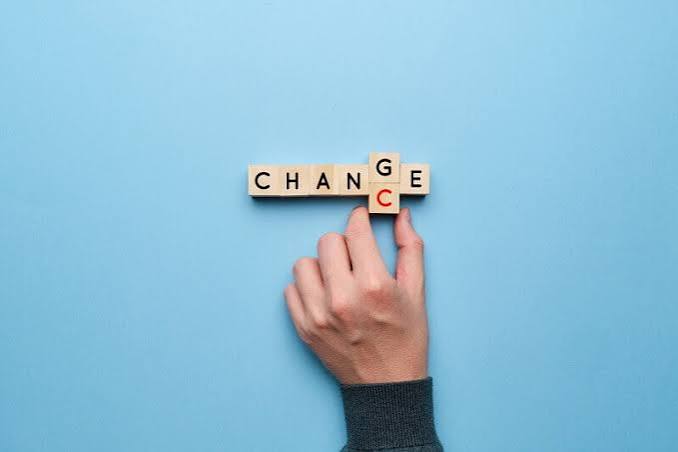
On social media, change is often portrayed as the beginning of a new and better life. Moving to another country, starting a new job, launching a business, or deciding to start over are presented in an attractive and inspiring way. Looking at these stories, it is easy to believe that success comes naturally—or even inevitably—to those who make bold decisions.
In reality, however, many life changes do not begin with excitement but with the realization that something is no longer working. Exhaustion, a lack of professional fulfillment, or the feeling of being stuck often create the need to search for a new direction. While change itself becomes inevitable, finding a way to navigate it is often far more challenging than simply recognizing that it is necessary.
Seeking Balance Instead of Revolution
According to Gallup’s State of the Global Workplace report, only 20% of employees worldwide say they are engaged in their work—the lowest level recorded since 2020. At the same time, researchers continue to highlight persistently high levels of stress and growing concerns about employees’ mental well-being.
This is particularly significant because studies show that people who enjoy their work, believe it positively impacts the lives of others, and feel they have influence over what they do report higher levels of well-being and stronger professional engagement.
As a result, more and more people are not searching for dramatic life revolutions but rather for a way to regain a sense of purpose, agency, balance, and control over their lives. The greatest transformations rarely stem from one sudden impulse. More often, they emerge from prolonged dissatisfaction, internal conflict, or the realization that one’s current path no longer aligns with personal values. The process of change, however, can be demanding because it involves uncertainty, fear, and the need to step outside one’s comfort zone.
Between Crisis and a New Beginning – The Art of Navigating Change
Agnieszka Gawędzka, a coach, mentor, and RTT therapist, shares what the process of change truly looks like—and why it rarely resembles the motivational stories so often seen on social media. She specializes in supporting people through personal and professional transitions and helping them overcome life and career crises. She currently lives in Japan, where the experience of emigration has become one of her greatest lessons in personal growth, openness, and self-discovery.
You work with women who want to change their lives. Where does the need for change come from?
I don’t think people actually have a need for change. Change is simply an unavoidable part of life, and all of us experience it. Everything changes—our circumstances, relationships, careers, and even ourselves. The real problem begins when we try to resist it.
I experienced this myself when I found myself in a difficult professional situation and realized that change could be approached differently—not through desperation, tears, and resistance, but in a more conscious, lighter, and authentic way. That’s what inspired me to start working with women. Even though we often don’t want change, it comes anyway. My goal is to help women move through it in a more balanced way, making the process as gentle and peaceful as possible.
What challenges do the women who come to you most often face today?
Most women don’t come to me because they dream of making a spectacular life change. They come because they are already facing a difficult situation and simply don’t know how to deal with it.
Very often, the issues revolve around work and a lack of professional fulfillment. They tell me they don’t enjoy their jobs, don’t find meaning in what they do, or struggle with relationships with their managers or colleagues. Many feel they need to make a change but have responsibilities that make it difficult to know where to begin.
They struggle with low self-confidence, feeling undervalued, burnout, or the belief that they are capable of achieving more but don’t know how. Sometimes these concerns involve major life decisions, while at other times they are much more practical, such as asking for a salary increase. Others work so much that they no longer have space for a personal life or starting a family. These are very real, everyday challenges, but beneath them often lies the same issue—a lack of harmony, purpose, and fulfillment.
Social media is full of messages encouraging people to “change your life.” How does that image differ from what change really looks like?
On social media, everything appears much simpler. We usually see only the final result—the inspiring, colorful, and attractive outcome. Much less attention is given to the journey itself.
Real change is not always pleasant. It involves resistance, fear, and discomfort. We may know exactly what we want to do while still being afraid to take the first step.
A good metaphor is climbing Mount Everest. If someone wants to reach the summit, they spend a long time preparing. They train, change their habits, and build physical endurance. The preparation itself is rarely comfortable, but it is essential. Change works in much the same way. We must prepare not only for success but also for moments of doubt, low motivation, and difficult days. Real transformation means preparing ourselves for how we will respond during those moments as well.
What does the process of change look like when someone wants to leave behind a life that no longer brings satisfaction?
The first step is discovering what we truly want. Many people who come to me admit they don’t know the answer yet. Together, we gradually uncover the direction they genuinely want to pursue.
Next, we explore their values because values serve as our compass. We identify their strengths, skills, and resources, focusing on what they already possess and can build upon. Equally important are their beliefs and mindset. We examine what supports them and what holds them back. Only then do we develop a practical action plan and break the transformation into manageable steps.
Moving to another country—in your case, Japan—is also a profound life change. How has it influenced you?
Completely. I believe Japan has become one of my greatest teachers. It is a culture entirely different from the one in which I was raised. Living here has made me realize that many things I once considered obvious are simply part of a Polish way of seeing the world. The Japanese cultural code is fundamentally different, and it is precisely where these two cultures meet that discomfort often appears.
And discomfort is an excellent teacher.
It has taught me patience, acceptance, greater mindfulness, and appreciation for things I had never noticed before. I am fascinated by the attention to detail, the beauty found in everyday life, and even the way food is served. These may seem like small things, but they reflect an entirely different approach to living.
Another invaluable experience has been getting to know people from different cultural backgrounds. I continue discovering Japan beyond its most famous destinations, and it is these everyday encounters that have taught me the most about the country.
Would you say that emigration both exposes our weaknesses and helps us grow?
Absolutely.
Living abroad reveals our limitations, our beliefs, and the areas where we resist what is different. It is not about judging one culture as better or worse than another—it is simply different. When we resist accepting that difference, we begin to feel that we don’t belong. That was one of the most important lessons I learned.
Curiosity and a willingness to understand are essential. The more we accept that things can simply be different, the easier it becomes to find our place in a new environment.
Life abroad encourages tremendous personal growth. It teaches openness, resilience, and the ability to see the world from multiple perspectives. Difficult experiences are also part of that journey, but they are often the ones that help us develop strengths and skills we never knew we had.
Moving Through Change with Intention
Change rarely looks the way social media leads us to imagine. It does not always begin with a bold dream or a courageous decision. More often, it begins with exhaustion, dissatisfaction, and the realization that the life we have built no longer reflects who we are or what we need.
Personal growth is not about constantly striving to become someone else. It is about developing a deeper understanding of who we already are. Sometimes the greatest transformation is not starting a completely new life, but learning how to move consciously through the one we already have.
Author: Martyna Korczyńska, student at SWPS University in Wrocław
This article was created as part of an internship at The Talk Box.