
Is it difficult to adapt to another nation’s culture?
We are not fully aware of what our own culture really is until we start communicating with people from other countries.
Usually, some cross-cultural differences may surprise us. At the same time, we are always motivated to find ourselves in a new reality. The first stage of the adaptation process is the so-called “culture shock.”
Differences
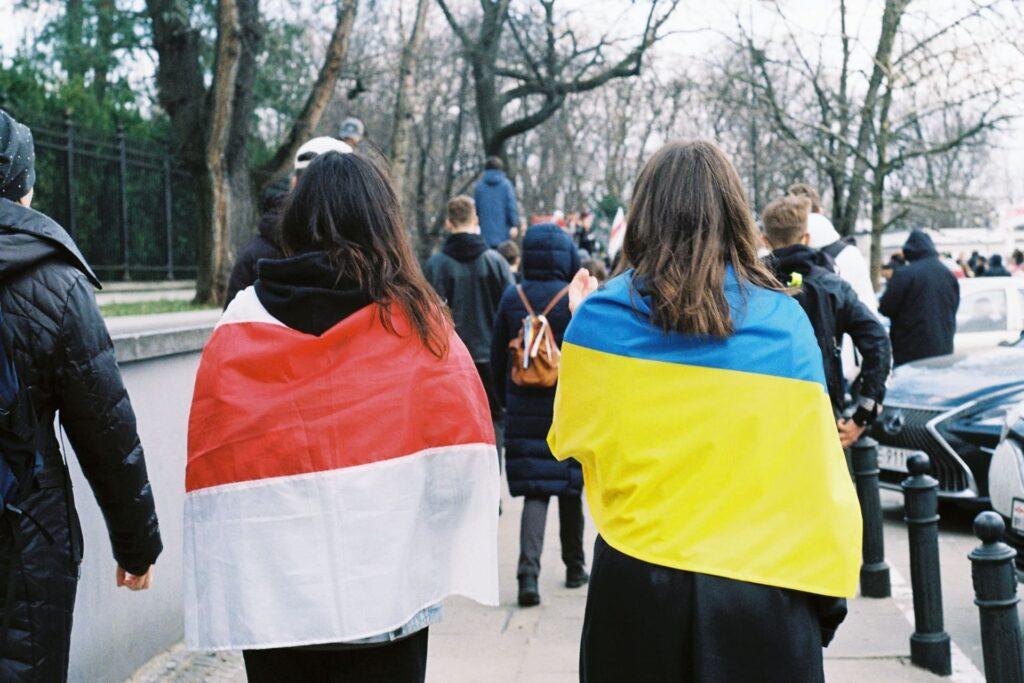
Polish and Ukrainian citizens do not have many cross-cultural differences due to geographical proximity. However, there are some aspects that may come as a surprise to representatives of both sides. In my opinion, the main differences are as follows:
1. Collectivist culture
Ukrainians are characterized by a collectivist culture rather than an individualistic one. As a result, friendship is prevalent in Ukraine, plus there is usually a family atmosphere. A popular custom is to gather around the holiday table not only with family but also with friends and neighbors. Feasting at a table set with all sorts of delicacies is a must.
As psychologist and sociologist Michal Bilewicz presents, he has directly participated in studies comparing different cultures. The surveys show that it is confirmed that Polish society is characterized by certain traits of individualism. In the opinion of most Poles, people should mind their own business, and the well-being of the family must overshadow a sense of empathy for colleagues or acquaintances. During the holidays in Poland, people spend time with their families without any additional guests.
2. Self-confidence
In comparison, Poles look and present themselves as more confident people. The reason for this is the economic stability that prevails in this country. Thanks to the favorable legal environment, Poles usually have no doubts about the well-being of their business. There have been many unpredictable events in Ukraine over the past few years, because of which the average Ukrainian cannot feel secure about the future. As a result, some anxiety and emotional strain can be felt in conversations with Ukrainian citizens.
3. Openness to communication
Ukrainians are more open to meeting new people and establishing social relationships. They easily find common ground with others and offer services or assistance with a smile and enthusiasm. Sometimes Poles may think Ukrainians are overly optimistic. However, it should be understood that Ukrainian people from more economically problematic regions are not so cheerful.
4. Trust
Ukrainians are much less trusting than Poles. They are more cautious because they fear being cheated or robbed. Polish citizens are much more relaxed in this regard.
Let me give an example from my own experience. A year ago I ordered window blinds. An employee of the company, also the owner, sent her husband to my address. Prepayment? No, no need. He didn’t demand payment after the job was done, he just sent me to the office. He had no guarantee that I would come to a certain place. He just trusted me. The next day I couldn’t pay the required amount because I didn’t have cash on me. There was also no possibility of paying with a bank card due to the lack of electricity in the office. After some time the owner became ill and was in solitary confinement, the corresponding office was closed. She convinced me that I would still manage to make the payment another time. At this point, I felt like I was more worried about her money than she was.
What seems obvious to some may not be so to others. It’s best to be open and patient with the people around us regardless of their cultural background.
Similarities
In addition to the dissimilarities mentioned above, there are some similarities between Polish and Ukrainian people. For me, the most notable are:
1. A strong sense of justice
Both Poles and Ukrainians strive for equality and justice. Both nations will not put up with humiliation and oppression. This is clearly expressed when communicating with them. Talking to a Pole or Ukrainian, one gets the impression that these people know their values and will never allow them to be treated in an unacceptable way.
More than two years ago, my friend from Wroclaw named Kamil and I went to a dance competition in Prague. At one of the establishments where we stopped for lunch, we were met with a rather condescending attitude from the waiter. When I asked how soon our order would be ready, the restaurant employee replied: “As long as it takes, that’s how long you’ll wait.”. Without a moment’s hesitation, Kamil and I left the room without waiting for our order, as we found the man’s words and tone really rude.
2. Difficulties with unity
Representatives of both cultures have problems with unanimity among themselves. In Poland, it is said “Two Poles, three opinions”, and in Ukraine “Where’s two Ukrainians, there’s three hetmans.” Our nations are not blind slaves, but people who have their own opinions and enough spirit to defend them.
3. Building relationships in business
The culture of communication in both countries is directly based on relationship building. In many other countries, people are inclined to solve a problem as quickly as possible. In Poland and Ukraine, one almost never enters into a business relationship from the first meeting. Everyone wants to take a look, test, feel and look closer first. The main reason above all is the desire to work with a good person. There is no better way to get to know someone than to talk for a longer time and meet in a relaxed atmosphere. It is normal practice to talk about business informally over a cup of coffee or a glass of beer.
It’s a good idea to be aware of the similarities and differences between Poles and Ukrainians if you get a chance to interact with either of them. Of course, each person has their own personality, but the basics of understanding communication between nations can help a lot in the future.
Recommended literature:
- Michał Bilewicz – “(Nie)pamięć zbiorowa Polaków jako skuteczna regulacja emocji”, wyd. Instytut Badań Literackich Polskiej Akademii Nauk, Warszawa 2016, Teksty Drugie: teoria literatury, krytyka, interpretacja Nr 6 (Poles’ collective (non)memory as an effective regulation of emotions)
- Joanna Konieczna – “Polska-Ukraina. Wzajemny wizerunek”, wyd. Instytut Spraw Publicznych, Warszawa 2001 (Poland- Ukraine. Mutual image)
- Olha Prokopenko, Larysa Kryvoruchko – “Podobieństwa i różnice kulturowe jako podstawa rozwoju wzajemnie korzystnych stosunków między Polską a Ukrainą”, wyd. Instytut Kulturoznawstwa Akademia Ignatianum, Kraków 2017, red. “Perspektywy Kultury” (Cultural similarities and differences as a basis for the development of mutually beneficial relations between Poland and Ukraine)
Translated by: Nadia Listopadska