
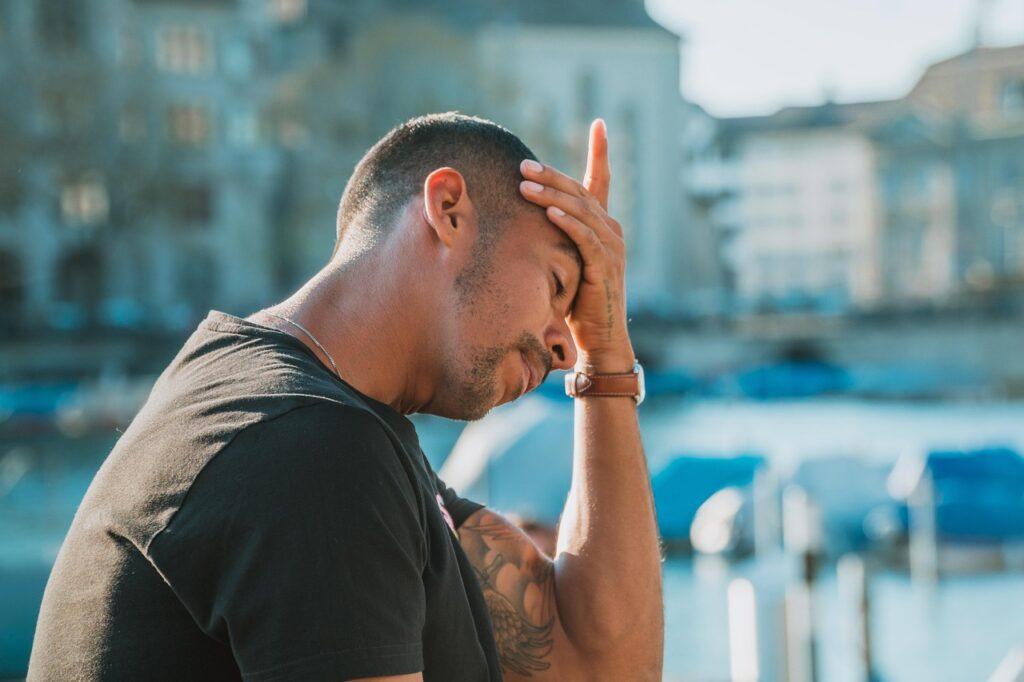
What could become a source of endless stress?
On February 24, 2022, the lives of Ukrainian citizens changed significantly. War came to our homes. This unforgivable crime against humanity, which we only heard about during history classes, turned out to be our new reality.
There is not a single Ukrainian who has not experienced the full range of emotions over the past 11 months: fear, anxiety, despair, panic and anger. Psychologists recommend not to try to control your emotions, but to let them pass through you. If anxiety does not leave you and prevents you from performing your duties, you need to do something about it.
In addition to feelings of fear for the safety of loved ones, uncertainty is a major cause of stress. We have no idea what might happen tomorrow, what to prepare for, much less plan our lives as we would in times of peace. Because of stress, people have trouble thinking critically, what makes their actions extremely instinctive.
Because the war is still going on, a short-term stressful situation turns into long-term stress that can lead to mental exhaustion. A mentally exhausted person is unable to rationally perceive information, making even neutral news seem like something negative. Under such conditions, our body becomes significantly weakened, resulting in various somatic disorders. It’s time to learn how to find inner peace on your own, set new goals and get out of the state of stress.
How to minimize the impact of stress
1. Acknowledge the feelings you are experiencing
Recognize what impact life situations have on you. Acknowledge – means letting accumulated feelings come out. Don’t be ashamed to cry, as this is an emotional reaction to a tragic event. A friend of mine told me that after moving from Kiev to Germany, she cried for the first time during the war when she was left alone with herself. For therapeutic purposes, my advice is not to hide your feelings but to let them show themselves.
2. Talk about what causes you anxiety
Try to find support from people who are going through similar or exactly the same problems as you. This fosters a sense of unity. Don’t be afraid to talk about yourself and by no means close yourself off from the world. According to a study conducted by US military psychologists, talking to other people helps reduce stress levels. Talk to someone you trust: a friend, family member, colleague or therapist. If you feel overwhelmed, simply ask for help and it won’t be a sign of weakness.
3. Take care of your physical health and focus on what you do on an everyday basis
Renew routine activities to the extent that your new conditions allow. Make every effort to restore your lifestyle. Take up running, go to bed before 11 pm, and stick to a schedule. A well-built schedule is a guarantee against burnout. It is in our nature to set goals for the near future. Try to make a plan for the next 2 days and follow it. That way you won’t succumb to external pressures. In the absence of a plan, you risk becoming a victim of emotional exhaustion.
4. Use the media less
Every day we follow an endless stream of news with a different motivation. The main reason may be an uncontrollable desire to control the situation. Limit the time you spend reading the news. I have found that after 20 minutes of watching the news, I feel heaviness in my shoulders and neck as if I were wearing a soldier’s uniform.
5. Do something positive
Paint a picture, go to a comedy show, visit a museum or just take a hot bath. Show more kindness and attention to yourself. A good way to get out of a stressful situation is to participate in activities that foster solidarity and encourage one to live. Showing support to those around you can also help prevent depression. Donate blood to those in need, collect packages for soldiers, talk to a friend or neighbor who is going through a difficult time.
It is possible that war or less global problems have destroyed your sense of dignity and strength of spirit. Remember that despite everything, you remain a person with your own inner world. Remind yourself that you are very valuable and important, both to your loved ones and to yourself. I would like everyone who has experienced the nightmare of war or the bitterness of life’s lesser problems to revive the will to live and be an active member of society.
Author: Lev Ruts, journalism student, currently residing in Odessa as of February 6, 2022, studying remotely at SWPS University of Humanities and Social Sciences

Recommended literature:
- Nina Ogińska-Bulik, Zygfryd Juczyński – “Osobowość stres a zdrowie”, wyd. Difin, Warszawa 2010, wydanie 2 uzupełnione (Personality stress and health)
- https://moz.gov.ua/article/health/jak-vporatisja-zi-stresom-pid-chas-vijni- (Jak radzić sobie ze stresem w czasie wojny), viewed: 13 stycznia 2023 (How to cope with stress during the war)
Translated by: Nadia Listopadska